
Small and medium enterprises (SMEs) face unique challenges in today’s competitive landscape. Many owners clock over 60 hours a week, trying to manage everything from operations to customer relationships. The key to reclaiming time and scaling efficiently lies in automating daily business tasks.
With the right tools, SMEs can reduce operational costs by up to 81%, speed up processes by 80%, and achieve over 90% accuracy.
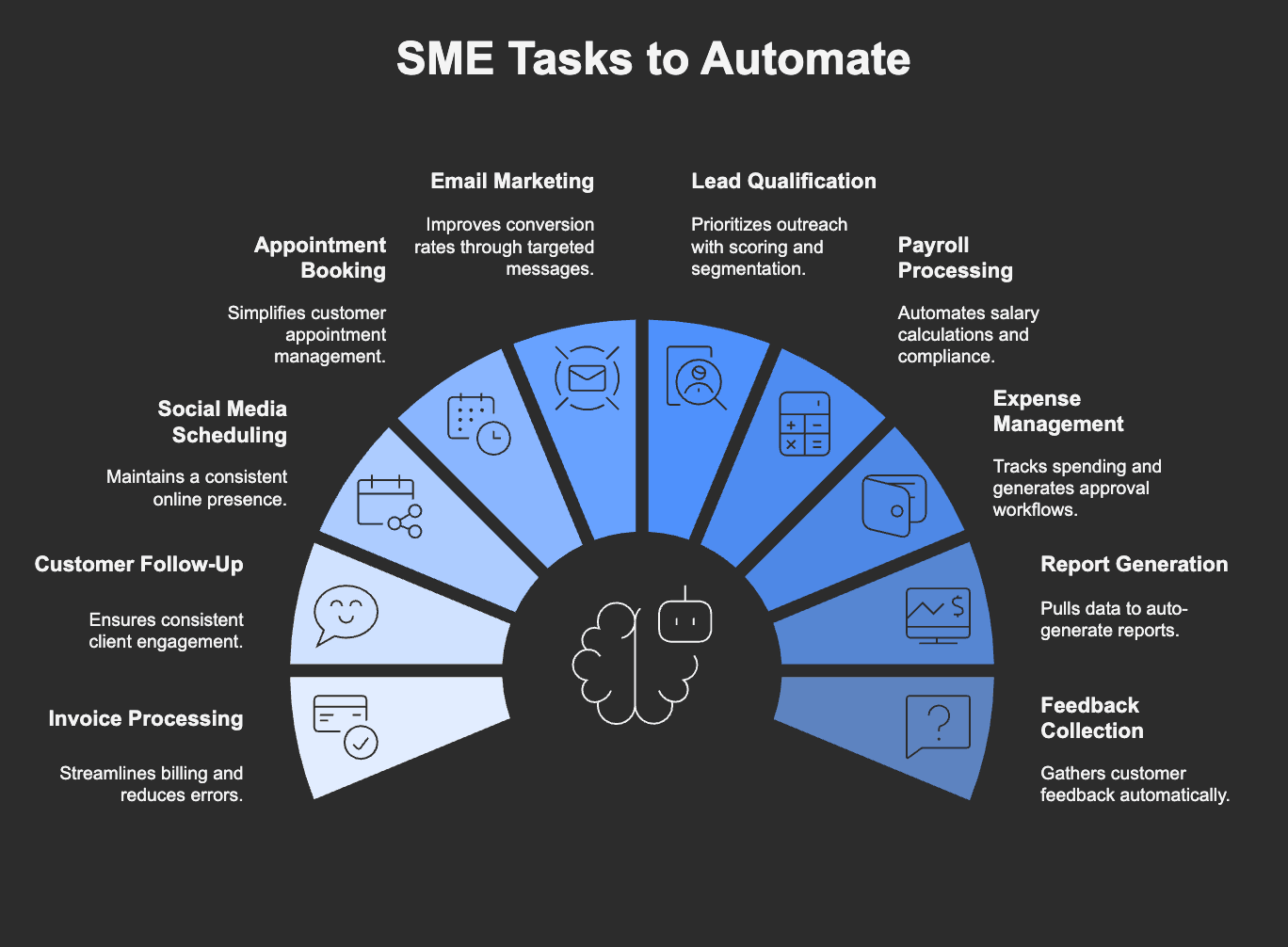
This guide walks you through ten daily tasks you should automate right now to save time, reduce errors, and drive growth.
Daily Business Tasks That Are Easy to Automate
These tasks don’t require complex tools or a big budget to automate. They’re the everyday processes that eat up your team’s time, like scheduling, follow-ups, or reporting. With the right automation tools, you can simplify these areas, reduce manual work, and get hours back every week to focus on growth.
Let’s look at the 10 business tasks you can start automating right away.
1. Automate Invoice Processing and Payment Management
Manual invoice processing can cost up to $8,640 per year for just 480 invoices. AI-powered invoicing tools like QuickBooks, Xero, and PaperLess use Optical Character Recognition (OCR) to capture invoice data automatically. This reduces processing time by up to 80% and cuts down on billing errors.
2. Automate Customer Follow-Ups with Email Sequences
Consistent client communication drives business growth, but manual follow-ups often slip through the cracks. Automation tools like HubSpot and Make.com let you send personalized follow-up emails based on customer actions, ensuring leads don’t go cold.
3. Schedule Social Media Posts Automatically
Managing daily social posts can take up hours. Platforms like SocialBee, Pallyy, and Buffer help you plan and publish content weeks or months in advance. Many tools even recommend the best times to post and generate captions with AI.
4. Use Automated Booking Systems for Appointments
Manual scheduling creates unnecessary back-and-forth and takes up staff time. Tools like Calendly and Picktime offer self-service scheduling with real-time calendar syncing and automated reminders. You can even include custom intake forms before a meeting.
5. Run Email Campaigns with Marketing Automation
Email marketing is one of the most cost-effective ways to nurture leads. Platforms like Mailchimp, Constant Contact, and HubSpot allow you to build workflows that send targeted messages based on behavior, preferences, and past purchases.
6. Qualify Leads Automatically with AI
Manually scoring leads is inconsistent and inefficient. Tools like Lindy automate the lead qualification process by analyzing behavior, demographics, and interaction data—often organizing results in under four minutes so your team can focus on closing deals.
7. Simplify Payroll with Automated Processing
Payroll requires handling taxes, hours, and compliance. Automated payroll systems sync with time trackers, calculate withholdings, and complete tax forms. This reduces errors and saves hours each month.
8. Track Expenses and Reimbursements with Smart Tools
Tracking receipts manually slows your team down. Budgetly and other expense platforms match receipts to transactions, flag issues, and speed up approval flows. This offers real-time expense insights and removes manual reporting hassles.
9. Generate Business Reports with Automated Dashboards
Instead of manually compiling reports, automation tools pull data from different systems and generate daily, weekly, or monthly reports. This saves hours and provides insights faster, helping teams make informed decisions.
10. Collect Customer Feedback with Smart Surveys
Customer feedback often gets delayed or missed entirely. Automated tools trigger NPS or satisfaction surveys based on interactions. This continuous feedback loop supports better service and stronger relationships.
Practical Tips to Start Your Automation Journey
- Identify your biggest time sinks in daily operations
- Evaluate low-cost or free tools that match those needs
- Begin with one or two tasks and scale from there
- Prioritize integration with your existing systems
- Use automation to support not replace your team
For comprehensive automation guidance and detailed implementation strategies, visit our reports page to access expert insights and case studies.
Automation is not just a trend. It’s a strategic tool to help SMEs grow smarter, faster, and more efficiently.
By automating these ten daily tasks, your business can free up time to focus on what truly matters growth, innovation, and customer success.
FAQs
How much can SMEs save by automating daily operations?
Automation can reduce operational costs by up to 81% and save up to 80% of the time spent on manual processes.
Where should SMEs begin with automation?
Start with repetitive, time-consuming tasks that follow clear rules like invoicing or scheduling. These are easy wins with immediate ROI.
Are automation tools affordable for small businesses?
Yes. Tools like Zapier and Calendly offer free or affordable plans built for SME budgets.
How can businesses ensure successful automation?
Start small, define goals, train your team, and use tools that integrate well with your current systems.