As we progress through 2025, predictive analytics has shifted from being a luxury reserved for big enterprises to a necessity for small and medium-sized businesses (SMEs). With AI and data technologies becoming more affordable and easier to use, SMEs now have the power to tap into predictive insights to guide smarter decisions and sustainable growth.
Understanding Predictive Analytics
Predictive analytics refers to the use of statistical methods, machine learning, and data mining techniques to analyze current and historical data to forecast future outcomes. Unlike traditional business intelligence that focuses on past performance, predictive analytics looks ahead, enabling businesses to act proactively rather than reactively.
For SMEs, this means being able to generate predictive scores or probabilities for individual customers, products, or internal processes. These insights empower smarter decision-making across key areas like marketing, inventory, operations, and customer retention.
Research shows that companies leveraging predictive analytics enjoy 8-10% higher profitability than those that don’t.
How SMEs Are Using Predictive Analytics in 2025
Predicting Customer Behavior and Sales Trends
SMEs are using predictive analytics to anticipate customer behavior and forecast sales more accurately. Instead of relying on guesswork or broad marketing pushes, businesses can tailor their offers based on data-backed insights.
For example, banks using AI-powered “next-product-to-buy” models have seen a tenfold increase in product recommendation success rates for SME clients. One online retailer using predictive analytics saw a 22% increase in average order value and an 18% drop in cart abandonment within just six months.
Inventory Management and Demand Forecasting
Managing stock levels is a critical challenge for SMEs. Predictive analytics helps forecast future demand by analyzing historical sales patterns, seasonality, and market shifts.
This allows businesses to:
- Reduce overstock and understock issues
- Improve cash flow
- Maintain product availability for customers
Improving Operational Efficiency and Reducing Costs
Predictive models can detect operational bottlenecks and potential equipment failures before they become costly.
SMEs use these insights to:
- Streamline scheduling and delivery routes
- Reduce waste and downtime
- Improve resource utilization
Businesses that adopt predictive analytics for operations report significant savings and faster issue resolution.
Financial Forecasting and Risk Management
With limited resources, accurate financial planning is vital for SMEs. Predictive analytics supports:
- Better cash flow projections
- Smarter investment decisions
- Early risk detection
By embedding predictive models into financial planning, SMEs can weather market fluctuations and make confident growth decisions.
The 2025 Advantage: AI-Powered Accessibility for All
In 2025, AI-powered tools have become more accessible than ever. According to Gartner, data analytics is no longer confined to a handful of experts it’s becoming a universal business function.
What this means for SMEs:
- User-friendly tools: No data science expertise needed
- Continuous learning: AI models get smarter over time
- Cost-effective: Many tools offer scalable subscription pricing
Recent reports show:
- 73% of SMEs now use AI for sales and marketing
- 65% leverage AI for inventory optimization
- 87% of all organizations expect AI to increase revenue within three years
How SMEs Can Get Started with Predictive Analytics
Step-by-Step Implementation Strategy
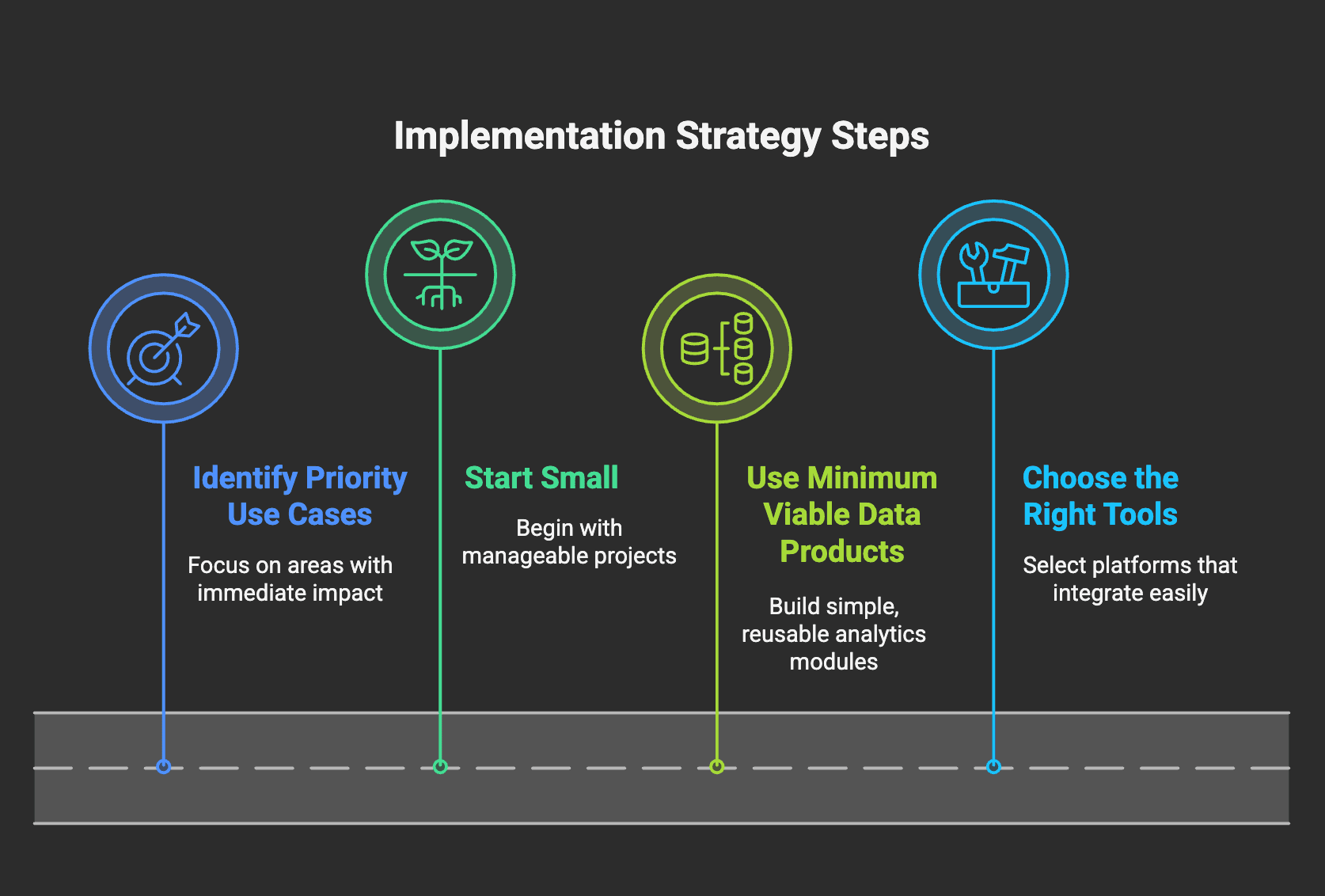
You don’t need to be a tech expert. Many AI platforms today come with drag-and-drop features and built-in recommendations tailored for SMEs.
Conclusion
Predictive analytics is no longer out of reach for SMEs it’s a must-have for competing and thriving in 2025. By starting with high-impact use cases, leveraging AI-powered tools, and building incrementally, SMEs can gain a competitive edge through data-driven decisions. In today’s business landscape, the real question isn’t whether SMEs can afford to adopt predictive analytics, but whether they can afford not to.
FAQs
How much does predictive analytics cost for SMEs?
Cloud-based platforms start at just a few hundred dollars per month. Most businesses see ROI within 6 to 12 months.
What kind of data do SMEs need to begin?
Start with your current customer data, sales records, and operational logs. Quality matters more than quantity.
When can businesses expect results?
Initial improvements can often be seen within 3 to 6 months, with stronger ROI realized within the first year.