Artificial intelligence is helping smaller businesses stand toe-to-toe with larger competitors. AI-powered forecasting has become a powerful advantage, enabling them to make faster, smarter decisions. Recent research from Gartner and Deloitte shows that SMEs using these tools are not just keeping up, they are thriving. By using data-driven insights that were once only available to large enterprises, these businesses are gaining real ground in competitive markets.
AI Makes Advanced Forecasting Accessible for All
In the past, forecasting required deep pockets and large analytics teams resources only big companies had. Today, AI is changing that. With cloud-based forecasting tools powered by AI, even small businesses can harness the benefits of predictive analytics.
Gartner reports that companies using AI forecasting tools see around 20% more revenue growth. A Deloitte study in the Asia Pacific region found 80% of small businesses say AI tools reduce operational costs, and 73% believe these tools help close the gap between them and larger competitors.
Why AI Forecasting Gives SMEs a Strategic Advantage
One of the biggest advantages AI forecasting offers is speed. While big firms often get bogged down by red tape, SMEs can move fast. AI makes it easier to pivot strategies based on real-time insights.
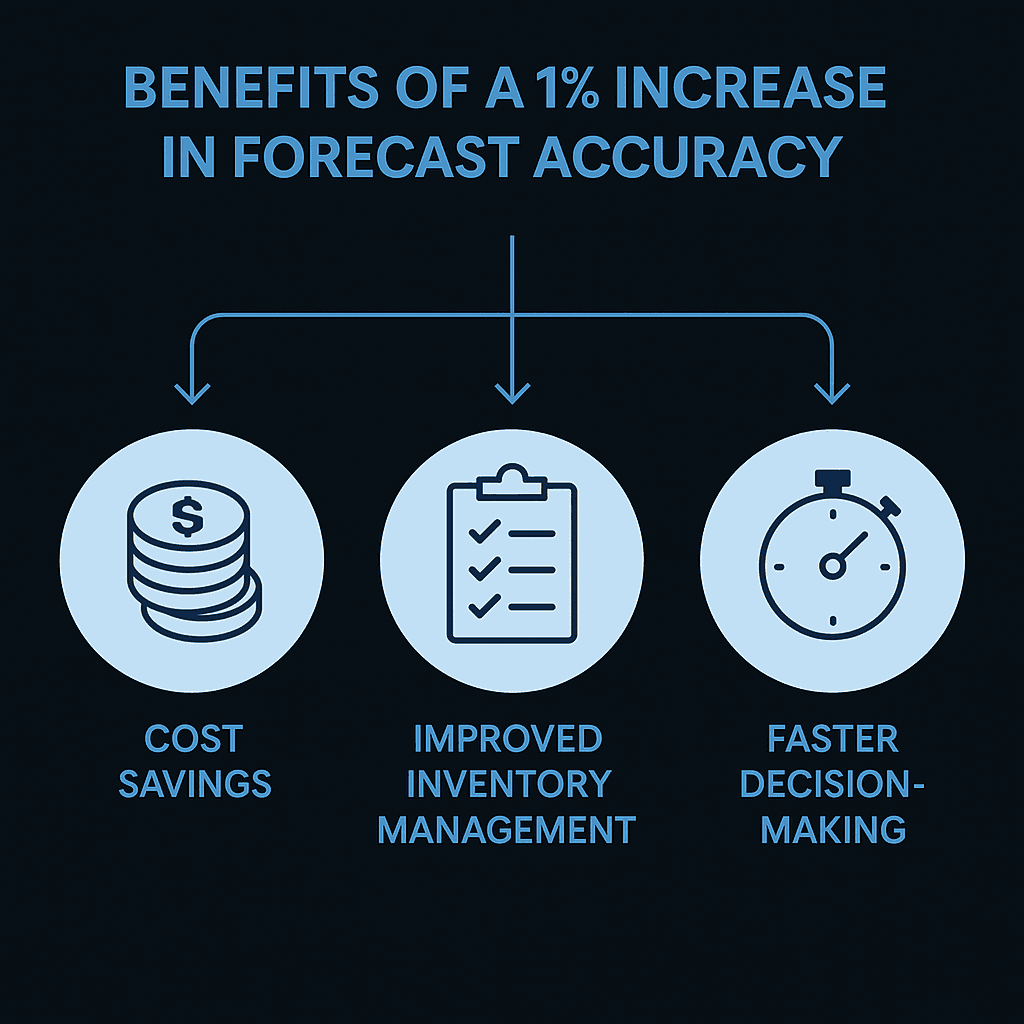
Forecast accuracy is also a game changer. A 1% improvement in accuracy can lead to big savings and sharper decisions. For SMEs with tight budgets, this level of precision directly impacts profitability and growth.
Gartner forecasts that by 2027, companies will use task-specific AI models three times more than large general-purpose models. That shift means specialized forecasting tools will become even more accessible and affordable for SMEs.
Real-World AI Forecasting Success Stories
Here are examples of small businesses that successfully used AI forecasting:
- Berlin e-commerce startup: Used AI to predict a 94% chance of a cash shortfall two weeks in advance. They avoided €22,000 in overdraft fees.
- Boutique retail store: Leveraged AI to analyze seasonal buying trends and cut inventory waste by 30%.
- Estonian manufacturing firm: Automated document processing with AI, cutting monthly close times by 80% and reducing invoice processing costs by the same margin.
| Company Type | AI Use Case | Outcome |
|---|---|---|
| E-commerce (Berlin) | Cash flow prediction | Avoided €22,000 in fees |
| Boutique Retail | Inventory forecasting | Reduced waste by 30% |
| Manufacturing (Estonia) | Document automation | 80% faster closing & cost savings |
Competing with Data, Not Size
AI forecasting enables SMEs to compete through insight and speed instead of size and budget. Deloitte found that 67% of small businesses using data analytics reported revenue increases.
Instead of adopting technology for its own sake, SMEs benefit by focusing on real business outcomes. Gartner recommends building use cases that are results-driven. This approach helps small businesses implement forecasting in ways that directly impact their revenue, customer satisfaction, and operations.
Breaking Down Barriers to AI Forecasting
In the past, SMEs faced many challenges like lacking IT infrastructure, limited skills, and poor data quality.
Now, modern AI platforms offer:
- Cloud-based tools that require no setup
- Automated data collection and processing
- Easy-to-use dashboards and interfaces
Deloitte reports that:
- 54% of SMEs are training their staff in AI
- 47% bring in external expertise
- 50% are successfully running AI projects internally
These stats show that barriers are falling, and opportunities are growing for smaller companies to adopt AI forecasting with minimal investment.
What’s Next for AI Forecasting in Small Businesses
AI is moving fast, and early adopters will continue to pull ahead. Nine out of ten SMEs believe AI will be critical for their operations in the next five years. To make the most of this opportunity, businesses should:
- Identify clear use cases for forecasting
- Improve data quality
- Build internal skills or partner with experts
For comprehensive insights into implementing AI strategies for your business, visit our reports page for detailed analysis and recommendations.
Conclusion
AI forecasting is reshaping how small businesses operate. With affordable tools, fast implementation, and high accuracy, SMEs can make better decisions, save money, and compete more effectively. By investing in AI forecasting today, small businesses position themselves as tomorrow’s market leaders.
FAQs
How much can AI forecasting improve business performance for SMEs?
AI forecasting can drive up to 20% revenue growth, cut waste by 30%, and improve operational efficiency by 80%.
How quickly can SMEs implement AI forecasting tools?
Basic tools can be up and running in 2–4 weeks. Full integration takes 2–3 months, depending on complexity.
Do SMEs need technical knowledge to use AI forecasting?
Most tools are built for business users. With basic training or external support, SMEs can adopt AI without deep technical skills.